This season of The Tessa Tubbs Podcast marks a shift for me.
For years, my work lived inside organizations helping leaders execute strategy, navigate complexity, and succeed in corporate environments.
That work still matters. But something else has been emerging over time: a deeper, more human question underneath so many leadership challenges.
What does it mean to lead yourself?
Not just to perform well.
Not just to succeed externally.
But to understand yourself accurately, take ownership of your choices, and live in alignment with what you know to be true.
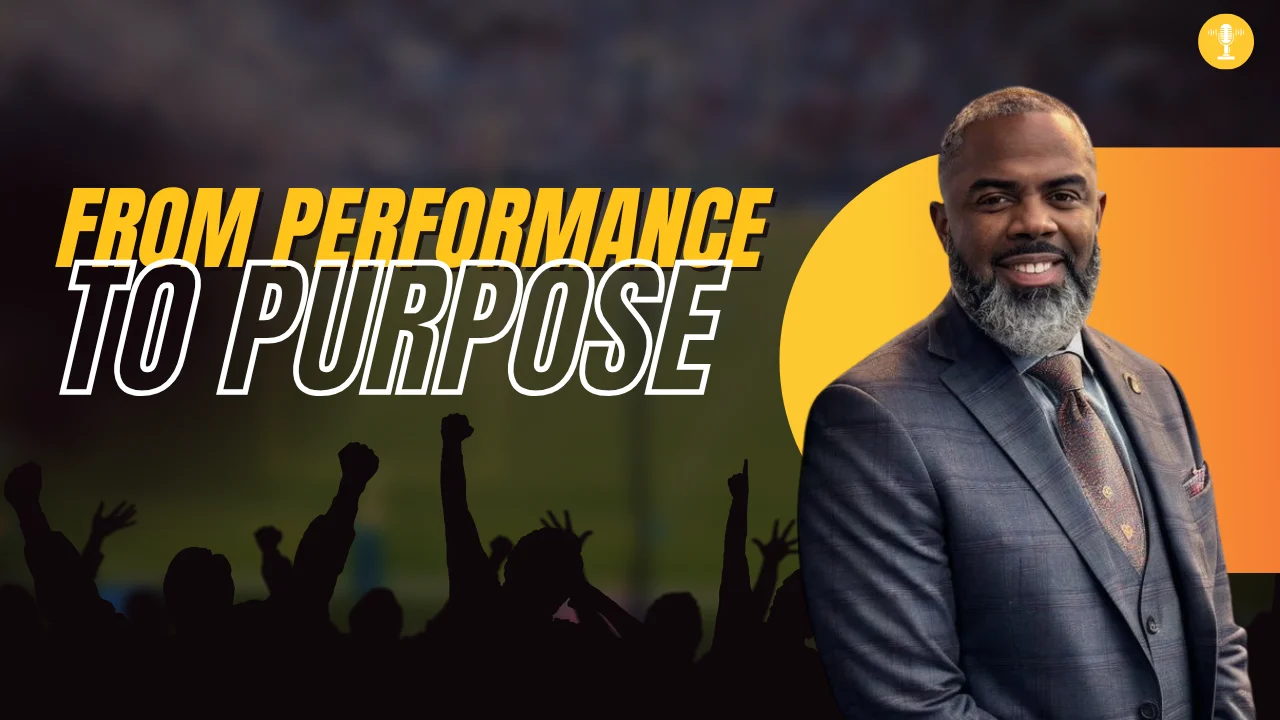
That’s why my conversation with Dr. Kevin Dyson feels especially meaningful.
Kevin is widely known for his NFL career, including moments etched into league history.
But what moved me most was the life he’s built beyond the field: as an educator, a founder, a father, and a man deeply committed to shaping what comes next.
This conversation was about reinvention. But more than that, it was about identity, agency, and legacy.
1) Self-leadership begins with refusing to “skip steps”
Kevin’s origin story starts with his mom, a single mother raising four children, setting a clear boundary: maintain a 3.0 GPA or you don’t play sports.
When his grades dropped, she took basketball away. He begged. He pleaded. She held the line.
And then she did something that still makes me pause: she came home with statistical probabilities of making it into major professional sports.
Not to crush his dream but to expand his reality: “You need something to fall back on.”
Absolutely — continuing the blog post from where we left off (same voice, same structure, grounded in the transcript).
She wasn’t trying to talk him out of ambition. She was protecting him from a life built on a single fragile pillar.
Kevin told me that lesson shaped everything: you can’t skip steps.
Not in character. Not in leadership. Not in building a life that lasts.
That’s self-leadership in its earliest form: choosing what’s right over what’s immediately gratifying, and building foundations before chasing outcomes.
Reflection: Where are you trying to skip steps right now?
In your healing, your growth, your career, your relationships?
2) “Team over self” is a leadership formation tool
One of the strongest themes Kevin returned to was what sports teach at a deeper level: team over self.
He described it simply: you’re part of something bigger than you. You have a role, an obligation, a job to fulfill so the team can succeed.
And what struck me was how transferable this is.
When people leave sports, Kevin said what many of them miss isn’t only the game itself. They miss:
- camaraderie
- fellowship
- accountability
- winning and losing together
That’s not nostalgia. That’s belonging.
In adulthood, especially for high achievers, we often chase results while starving the relationships that make results sustainable. Self-leadership includes the ability to build a life where you are not the center of everything, but you are responsibly connected to something that matters.
Reflection: Where have you drifted from “team over self” into “self over everything”?
And what would it look like to return?
3) Reinvention requires grieving who you used to be
Kevin’s NFL career included major highs and major hardships. Career-ending injuries have a way of forcing the identity question early: Who am I when I can’t do what I’ve always done?
But what impressed me most wasn’t the toughness. It was the honesty.
Because for many people, reinvention isn’t a strategy problem.
It’s a grief problem.
The old version of you had traction. Recognition. Certainty.
And the next version of you might require starting over, being unseen, becoming a beginner again.
Kevin talked about stepping into education and building what would eventually become part of his legacy in a completely different arena.
That requires humility, patience, and the kind of inner stability that isn’t dependent on applause.
This is the heart of self-leadership: identity stewardship.
Who you are when titles fall away.
Who you are when the crowd gets quiet.
4) Letting go is not weakness. It’s maturity.
There was a moment in the episode that felt like a direct invitation.
Kevin spoke about how many of us hold onto past hurt, disappointment, and frustration, and it hampers our ability to grow.
He called it an “anchor.”
And he was clear: resentment and anger rarely punish the other person. They mostly affect you.
Sometimes leadership looks like letting go of:
- self-pity
- resentment
- anger
- even an old idea so you can get to a better one
I want to say this plainly: if you’re still carrying an anchor from a past season, it will shape your decisions in the present. It will narrow your risk tolerance. It will distort your self-perception. It will make you smaller.
Self-leadership is not “moving on” in a shallow way.
It’s choosing not to stay emotionally tethered to what you cannot change.
Reflection: What anchor are you dragging into a new season?
5) Legacy is what you build when the spotlight moves on
Kevin shared a full-circle moment that stayed with me: keeping a promise he made as a kid to create stability and freedom for his mom.
That’s the kind of success that doesn’t fade with time.
And it connects to the larger arc of his post-football life: education, leadership, and investing in the next generation.
Legacy isn’t a highlight reel.
It’s what remains when external success stops being the point.
That’s the pivot I’m making with this brand, and why this conversation belongs in this season.
Bringing it back to Self-Leadership
If you’ve been following my work, you know I’m centering this season on three pillars:
- Know Yourself Accurately
- Own Your Choices Completely
- Live With Intention and Integrity
Kevin’s story touches all three.
- Knowing yourself accurately means you stop defining your worth by one role.
- Owning your choices means you don’t outsource your life to circumstances, nostalgia, or resentment.
- Living with intention and integrity means your values show up in your actions, not just your aspirations.
A simple practice to take with you
If this conversation stirred something, try this journaling prompt:
- What step am I trying to skip?
- What anchor am I still carrying?
- What does alignment look like in the next 24 hours?
That’s self-leadership: not dramatic transformation, but quiet integrity practiced consistently.
FAQ: What is self-leadership?
Self-leadership is the ability to know yourself accurately, own your choices, and live with intention and integrity—especially under pressure.
FAQ: How do you let go of resentment as a leader?
Start by naming the “anchor” you’re carrying, noticing the cost, and choosing one small action that aligns with who you want to become.
Listen to or see the full episode
If this resonates, you’ll love the full conversation with Dr. Kevin Dyson on The Tessa Tubbs Podcast.
Find the episode on all streaming platforms here.
Learn more about Kevin’s work: